Gladys Grainier
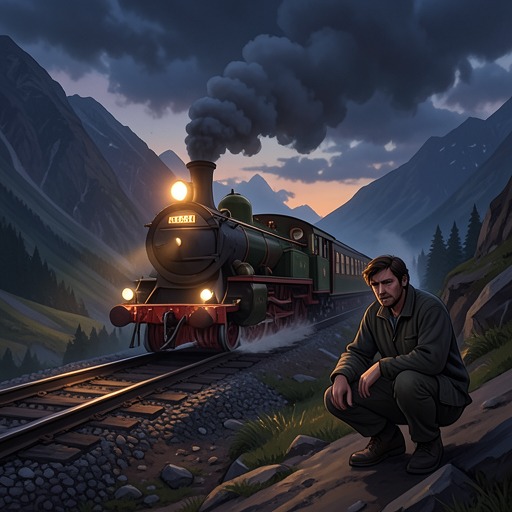
Train DreamsGladys Grainier, born Gladys Olding, is the wife of Robert Grainier and the mother of their daughter, Kate. Her decisive importance lies in the way the story gives her a small, practical life and then allows that life to govern Robert Grainier’s entire existence after her death: she is first the person who draws him out of emotional inexperience, then the absent figure around whom his mourning organizes itself, and finally the spirit who reveals that Kate survived the fire that killed her.
Identity and Introduction
Gladys Grainier enters Robert Grainier’s life through the Methodist congregation. A cousin takes him to church, where he notices the small girl across the aisle singing softly during the hymns. After the service, during a gathering of lemonade and pastries, Gladys introduces herself with an easy smile. Robert Grainier is unaccustomed to girls and usually stays away from them, while Gladys appears older than her years because she grew up in a sunny pasture and spent so much time working outdoors. Her hands are described as rough as those of a much older man, establishing her not as a sheltered romantic ideal but as someone shaped by labor and physical endurance.
Her introduction is therefore tied to ordinary communal life rather than spectacle. The Methodist services and Wednesday prayer meetings become the regular circumstances in which Robert Grainier seeks her out. Their relationship develops through repetition: he must deliberately return to the places where she can be found, and she becomes recognizable to him first through her voice, her working hands, and her calm social ease.
Courtship and Marriage
During the summer, Robert Grainier takes Gladys along River Road to show her the acre he has acquired on the short bluff above the Moyea River. He explains his plans for a cabin and garden, the nearby meadow where he may graze a few animals, and the possibility of keeping sheep, goats, or a milk cow. He does not explicitly tell her why he is describing this future, but he hopes she understands. Her decision to wear the dress she usually wears to church suggests that the outing carries the significance of their shared courtship world.
Their intimacy becomes physical and transformative when they spend an afternoon kissing among the daisies. Robert Grainier experiences the first kiss as a sudden release from the directionless life he has known, as though he has been pulling the wrong way and is now traveling downstream. Beneath a jack pine in the pasture, with Gladys resting her cheek on his shoulder, he asks whether she would care to be his wife. She accepts, saying, “Yes, Bob, I believe I would like it,” and the tension of the proposal dissolves into shared laughter. The scene establishes marriage as a mutual, modestly expressed choice rather than a grand social performance.
Their home is a single-room cabin, and Gladys’s role within it is practical and intimate. When Robert Grainier returns from the railroad work, he brings her a bottle of Hood’s Sarsaparilla because she is suffering from salt rheum, a headache, and a stopped nose. She could have continued washing clothes and preparing potatoes and trout, but their custom is to let her rest with the sweet tonic and take a holiday from chores. The arrangement reveals affection through routine: care is expressed by recognizing her fatigue and temporarily suspending the work expected of her.
Motherhood and Domestic Life
Gladys is nursing Kate when Robert Grainier comes home with the sarsaparilla. The infant is four months old, bald, and mildly ill, with crusted eyes and a runny nose, and she does not seem to recognize her father. Gladys nevertheless answers Robert Grainier’s playful questions about whether Kate can taste the tonic while nursing. Their exchange is affectionate but grounded in bodily, household details rather than idealized sentiment. Gladys’s motherhood is shown through feeding, tending illness, and improvising care within a poor cabin.
Later, when a northbound Spokane International train wakes Robert Grainier, he finds himself alone in the straw bed. Gladys is up beside the stove, scraping cold boiled oats from the pot and letting the baby suckle the porridge from her finger. The scene makes her labor visible at the hour when the rest of the household should be sleeping. It also places her and Kate in the recurring soundscape of the railway: the train passes two miles down the valley, while the family’s private life continues in the cabin, close to but separate from the industrial world that employs Robert Grainier.
Death in the Moyea Valley Fire
Gladys’s domestic future ends in the summer of 1920, while Robert Grainier is away at the Robinson Gorge job. Returning with four hundred dollars in his pocket, he travels by passenger car to Coeur d’Alene and then by wagon up the Idaho Panhandle, only to ride into a thickening haze of wood smoke. Bonners Ferry is crowded with residents from along the Moyea River who have lost their homes. Robert Grainier searches among the refugees and at the fairgrounds, where roughly a hundred people have gathered with waterlogged fragments of their possessions, but nobody has news of Gladys or Kate.
The uncertainty initially becomes a form of torment. Robert Grainier understands that he has lost his wife and little girl, yet he repeatedly imagines that they escaped and that he must search the world until he finds them. Nightmares bring Gladys back to the burned homesite in smoking rags, carrying Kate and discovering that nothing remains. His grief is thus divided between knowledge and refusal: the fire has destroyed the evidence of domestic life, but the absence of bodies leaves hope able to return as an irresistible thought.
After several weeks in Creston, Robert Grainier rents horses and a wagon and travels back up the river road with supplies, intending to build shelter on his acre and wait through the winter for his family. The ruined valley corrects his hope. Ash lies so deeply over the road that it resembles snow, and the reek makes breathing difficult. He concludes that only the fastest animals and creatures with wings could have escaped the fire, then turns back to town. The journey transforms uncertain loss into accepted widowhood: the landscape itself becomes the evidence that his former home and family life cannot be recovered in their previous form.
Posthumous Visitation and Kate’s Survival
Years later, after Robert Grainier has rebuilt a cabin on the site of the old one, Gladys returns to him in a supernatural visitation. A train dream has terrified him by carrying him back toward childhood, and the cabin now contains enough of the old domestic order to resemble the home he shared with Gladys and Kate: a properly roofed structure with windows, benches, a table, and a barrel stove. He senses Gladys moving through the room before seeing her. The dog beside him does not bark, but its hair rises as the visitation takes visible shape, first as a wavering light and then as Gladys, flickering like an image in a motion picture.
Gladys does not speak aloud. Instead, she communicates that she mourns Kate and cannot rest because she cannot find her daughter among the dead. Her visitation replays the final moments of the fire. She escapes the burning cabin carrying Kate, a Bible, and a red box of chocolates; as the heat drives her toward the river, she abandons possessions one by one. When she needs a hand to steady herself while descending the rocky bluff, she throws away the Bible rather than the chocolates. She then falls, breaks her back, loses the use of her legs, and can only loosen the knot holding Kate against her so that the child can crawl away along the shore. Gladys drowns, while the baby gathers the scattered chocolates from the eddy pools and rocks.
The vision gives Gladys’s death a precise physical sequence and also frames it through her troubled religious interpretation. She believes that abandoning the Bible, rather than the candy, has prevented her from entering peaceful rest. Yet the revelation reverses the meaning of the fire for Robert Grainier: Gladys died, but Kate escaped. When the visitation ends, he is left alone in the dark cabin, unable to understand how the rescue could have occurred without becoming public news. Gladys’s final appearance therefore does not restore the family. It replaces one unbearable uncertainty with another: Robert Grainier learns that his daughter lived, while remaining without any practical means of finding her.
Narrative Role and Significance
Gladys Grainier’s significance extends beyond her scenes because the narrative measures Robert Grainier’s inner transformation through her absence. Before meeting her, he is a steady but nearly anonymous laborer who moves among railroad and short-term work crews. Courtship gives that undirected life a home, a future, and a vocabulary of ordinary care. Marriage makes the acre above the Moyea River more than property; it becomes the material setting for a shared life that includes illness, nursing, trains at night, and small acts of tenderness.
Her death then turns domestic objects and natural elements into carriers of grief. The cabin, the stove, the river, the fire, and the passing trains recur after the family is gone, but each has changed meaning. Robert Grainier’s later dreams move from Gladys and Kate to the campfire, and eventually to trains associated with a childhood he had almost forgotten. When Gladys appears, she returns not to reverse the loss but to disclose its hidden remainder. Her presence confirms both death and survival, making her the threshold between mourning for the dead and an impossible search for the living.
Gladys is consequently neither a complete biographical portrait nor merely a plot device. The text preserves her through gestures, work, bodily vulnerability, religious belief, and maternal action. Her limited time in the narrative is proportionate to the fragility of the life she shares with Robert Grainier, but the consequences of that life endure: she becomes the remembered center of his marriage, the imagined witness of the fire, and the source of the knowledge that Kate was not consumed by it.